If you’ve read our hatomugi toner review, this is the other end of the spectrum. Where Naturie’s toner is almost water, Gokujyun is closer to syrup. It’s still cheap by Japanese drugstore standards, and it’s just as easy to recommend — it just does more work for you in a single step. This is a total household name in Japan, and honestly, we think it deserves way more of a following outside Japan too.
Why hyaluronic acid, and why this brand
Hyaluronic acid isn’t exotic anymore. It’s in half the skincare aisle worldwide at this point. What makes Gokujyun stand out is how much of it’s packed in, and in several molecular weights, marketed as reaching different depths of skin instead of just sitting on the surface.
Hada Labo, made by Rohto, is one of Japan’s most recognizable skincare names, and Gokujyun (“ultimate moisture”) is the line that built that reputation. It’s less a niche pick and more the toner half the country already has an opinion on, and we think it deserves to be a much bigger deal in the US too. (One heads-up if you go looking for it yourself: you’ll sometimes see this exact formula sold under the name HOSHISU on Amazon too — same manufacturer, just a different export label. Not a scam, just a naming quirk.)
Quick facts
| Product | Key ingredient | Texture | Best for | Rating | Price |
|---|---|---|---|---|---|
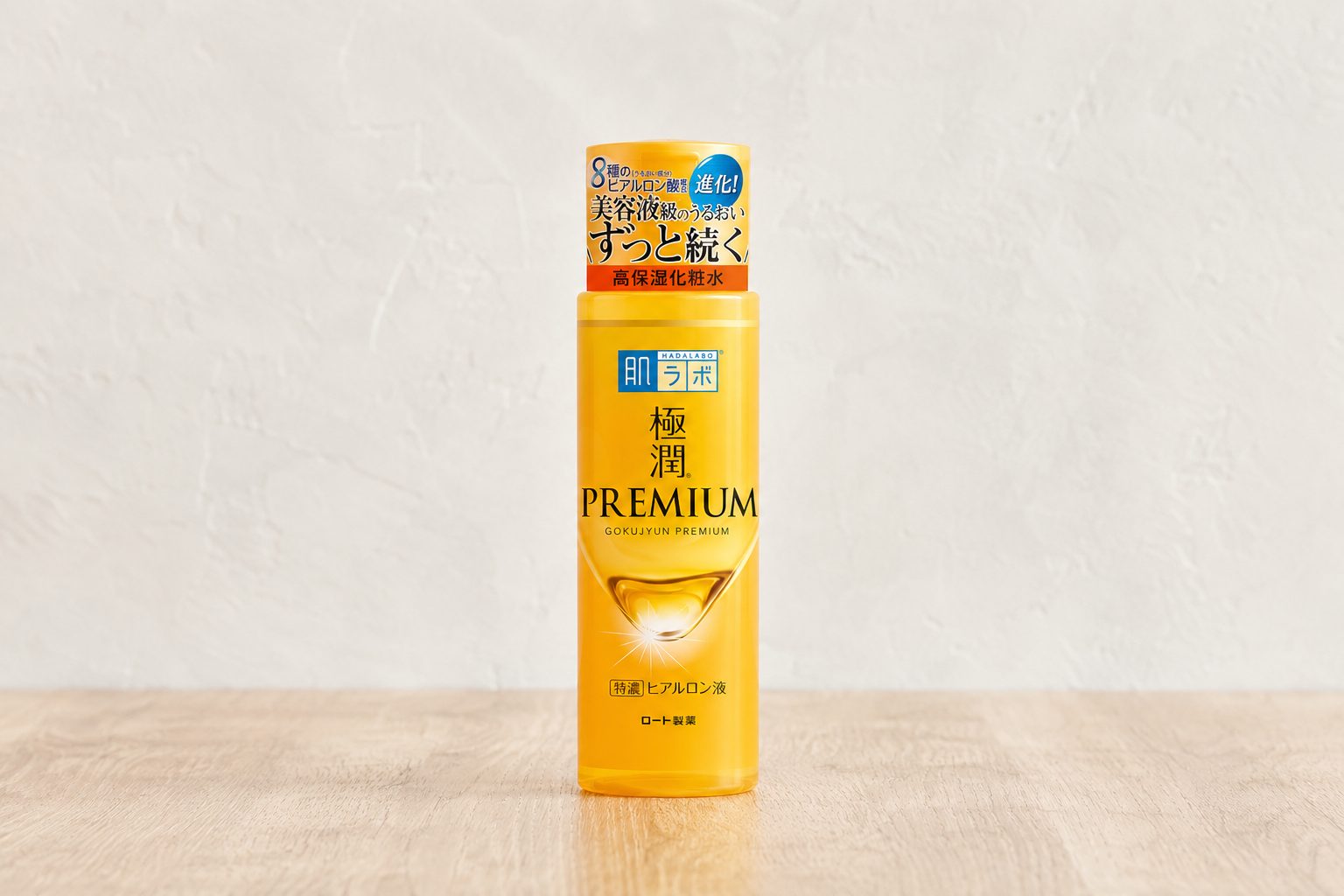 Hada Labo Gokujyun Premium Hyaluronic Acid Toner (170ml, 2-Pack) Hada Labo Gokujyun Premium Hyaluronic Acid Toner (170ml, 2-Pack) | Hyaluronic Acid (several molecular weights) | Thick, syrupy ('torori'), not watery | Dry or dehydrated skin, anyone who wants fewer steps | Check price → |
What it’s actually like
Forget what you know about Japanese toners being thin. This one’s thick, almost syrupy. Pour a coin-sized amount into your palm and it holds its shape for a second before you press it in.
Nico: My first reaction was skepticism. Something this viscous usually means a slick, filmy finish. It doesn’t. It presses into my skin fast, leaves a plump, slightly “mochi” feel, and doesn’t sit on top the way a heavy cream would. I’ve started using it down my neck and across my collarbone too, since it spreads further than a bottle this rich has any right to.
Taro: My take is less romantic. Right out of the bottle it’s a little tacky for the first minute, especially when I’m generous with it. It settles down fast, but if you’re impatient about getting dressed after a shower, that minute matters.
Pros
- Thick, cushiony texture that still absorbs, doesn't just sit on the skin
- Enough moisture on its own that you can skip a heavy cream, even in summer
- Fragrance-free and gentle enough that sensitive skin in the family got along fine with it
Cons
- Feels tacky for the first minute after applying, especially with a generous amount
- Marketed as fragrance-free, but a few of us noticed a faint alcohol-like smell right when applying it (it fades fast)
How we actually use it
A ten-yen-coin amount, patted or lightly massaged in after a bath, is about right for the face. You’ll want a bit more if you’re doing your neck too.
Taro: I do mornings this way before work — two or three drops, massaged in rather than swiped on, and out the door.
If you’ve got dry patches, elbows, the backs of your hands, this is thick enough to work there too without feeling like you’re wasting a facial product on your knees.
Who this is for
- Dry or dehydrated skin: this is built for you. It’s doing more work than a typical light toner.
- Anyone who wants fewer steps: rich enough to skip a separate moisturizer on easy days.
- Naturie fans who want an upgrade: if a lighter toner has started feeling too thin, this is a natural next step.
- Not for: if you want a fast-absorbing toner to layer several products on top of, the thickness here might slow you down.